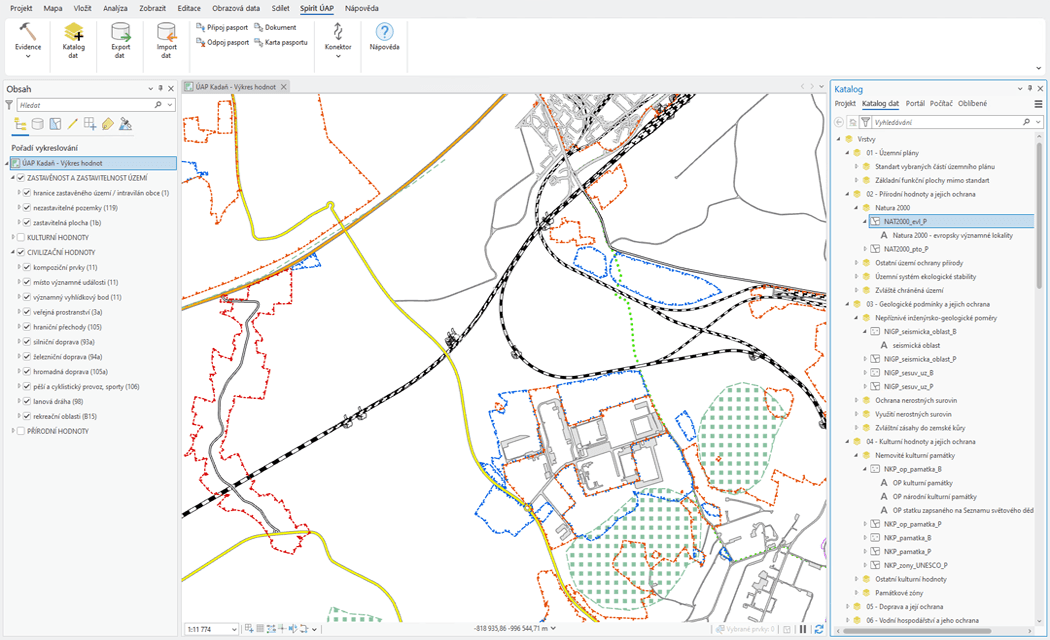

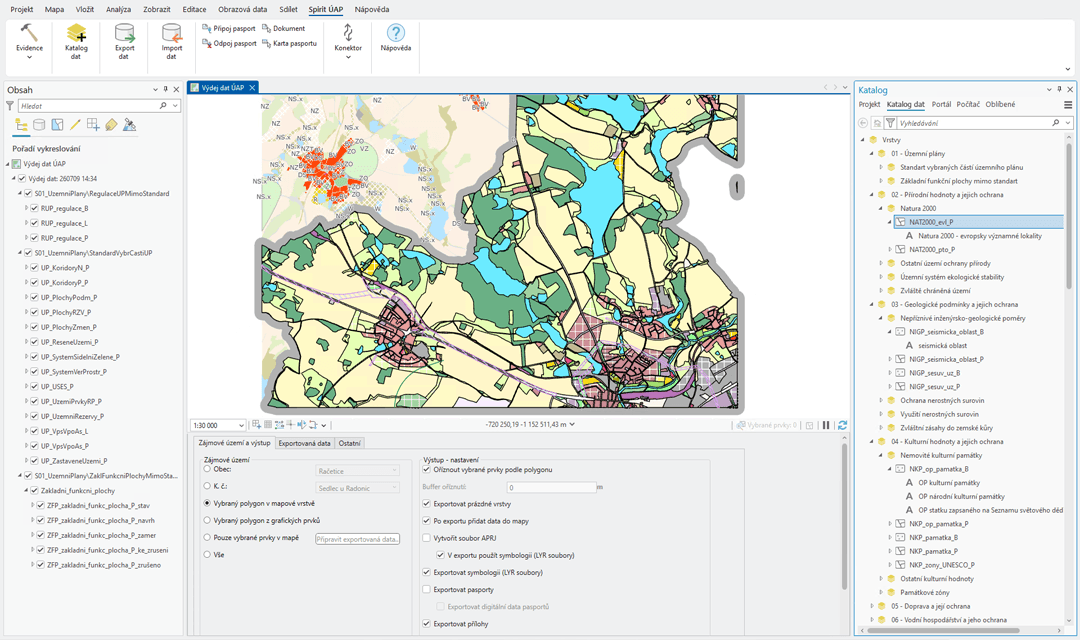
ÚAP serve to collect, manage and evaluate information about an area, its values, limits, problems and development potential. In other words, they form the data and analytical basis from which decisions on the development of towns, municipalities, regions and individual localities are then made.
Data in one place
A major advantage of ÚAP is that they bring together data from different providers in one place. The compiling authority does not have to work with fragmented material from many separate sources, but can record, check and update it in a single data warehouse. That considerably improves clarity, reduces the risk of errors and makes the subsequent processing of data for spatial planning easier.
Identifying problems
ÚAP are also important for identifying problems in an area. They make it possible to assess conflicts between development intentions and limits of land use, to reveal shortcomings in infrastructure, to monitor areas at risk or to name the main development needs. These findings are then used, for example, when preparing the analysis of sustainable development of the area, SWOT analyses or spatial planning documentation.
Spirit ÚAP and spatial analytical documents
The main benefit of the Spirit ÚAP application is therefore that it gives compiling authorities a practical tool for maintaining this agenda. It allows them to record data received from providers, update the ÚAP data warehouse, work with individual phenomena and prepare the outputs needed for the ÚAP documentation. This simplifies both the administrative and the specialist part of the work and supports a consistent, systematic and transparent approach to managing data about the area.